IV insulin infusion safety guidance
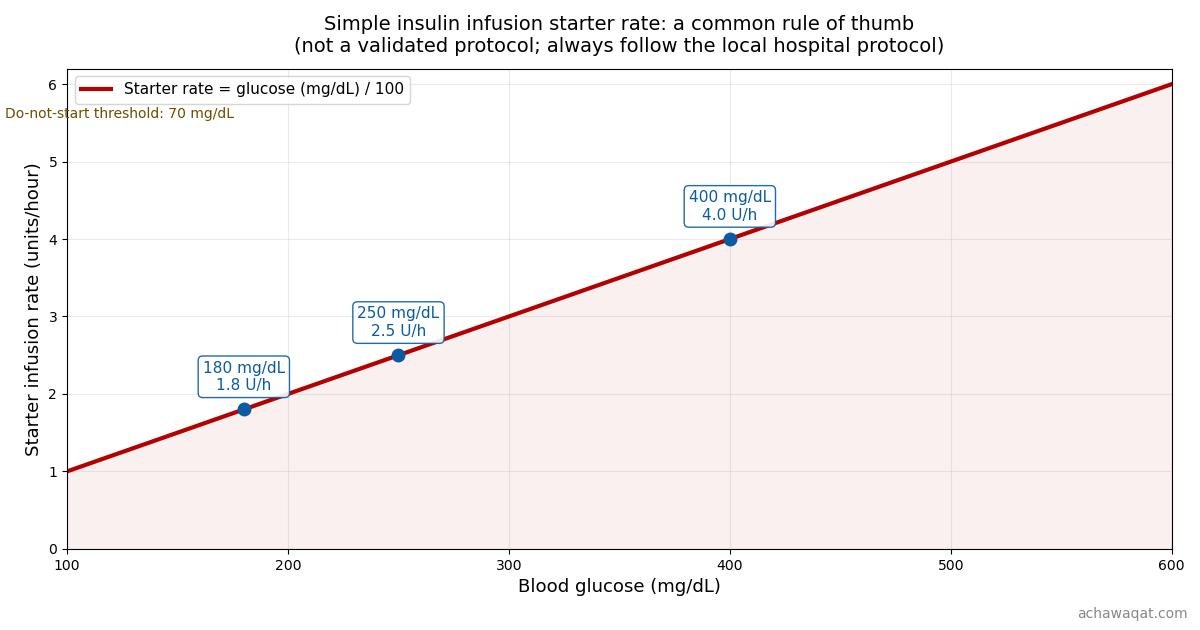
This page previously used a glucose-divided-by-100 rule to calculate a pump starting rate. That heuristic was not a validated protocol and has been withdrawn.
No infusion rate is calculated here
Intravenous insulin is a high-alert medicine. Select the applicable diagnosis and follow the current hospital protocol, including fluid, potassium, glucose, ketone, acid-base and monitoring requirements. A glucose value alone is not sufficient to determine a safe infusion rate.
Current consensus distinctions
- DKA: the 2024 consensus describes a fixed-rate IV infusion of 0.1 units/kg/hour, with protocol-directed fluids, potassium management and monitoring.
- When glucose falls below 250 mg/dL (13.9 mmol/L): add dextrose and reduce the infusion to 0.05 units/kg/hour while continuing treatment until ketoacidosis resolves.
- HHS without acidosis: after appropriate initial fluid treatment, the consensus describes 0.05 units/kg/hour.
- Mixed DKA/HHS with significant ketonaemia or acidosis: the consensus describes 0.1 units/kg/hour.
- Bolus: an initial bolus is reserved for circumstances such as an anticipated delay in obtaining venous access, rather than being an automatic step.
These statements summarise a consensus report and are not a standalone prescribing protocol. Local policies may specify different workflow, monitoring, preparation and escalation requirements.
Minimum safety checks before treatment
- Confirm DKA, HHS, mixed crisis, or another protocol-defined indication.
- Check potassium and correct or hold treatment according to the local protocol.
- Start and reassess fluid therapy as clinically indicated.
- Confirm the insulin preparation and pump concentration independently.
- Monitor glucose, electrolytes, ketones, venous pH or bicarbonate, and clinical status.
- Use a documented transition plan when moving to subcutaneous insulin.
Primary source
Umpierrez GE, Davis GM, ElSayed NA, et al. Hyperglycemic Crises in Adults With Diabetes: A Consensus Report. Diabetes Care. 2024;47(8):1257–1275. doi:10.2337/dci24-0032.
Medical review: Dr. Taimoor Asghar. Last reviewed 5 October 2026.