Table of Contents
DASS-21 validity matters every time a researcher treats the scale’s three subscales as separate outcomes. The DASS-21 is one of the most widely used mental health questionnaires in student research, with separate subscales for depression, anxiety, and stress. In our psychometric study of 602 Pakistani university students, the confirmatory factor analysis fit the data well, with a CFI of 0.954.
But the anxiety and stress latent factors correlated at 0.949, a near-perfect overlap. When two supposedly distinct subscales correlate that highly, you have to ask whether they are measuring different things at all. Here is what that number means for DASS-21 validity, and what to do about it.
DASS-21 validity: what we tested
We surveyed 602 students (424 medical, 178 non-medical; mean age 21.62) at universities in Lahore, administering the PHQ-9 and DASS-21 alongside demographic, treatment-history, substance-use, and sleep variables. The psychometric work was thorough: reliability analysis, confirmatory factor analysis, measurement invariance testing, item response theory, and symptom network analysis. I led the study across its full lifecycle, from the research question to the published manuscript.
The fit looked good
By the standard yardsticks, the DASS-21 behaved well. The CFA supported its three-factor structure: CFI 0.954 and TLI 0.948 (both near 1, which is good), RMSEA 0.052 and SRMR 0.031 (both near 0, which is good). Internal consistency was solid too: PHQ-9 alpha 0.823, DASS-21 subscale alphas from 0.854 to 0.879. On the surface, this is what DASS-21 validity success looks like.
If you stopped there, you would report the study as a clean validation and move on. Many researchers do stop there. The interesting part was hiding one table deeper. A clean validation story is tempting, but DASS-21 validity deserves the deeper look.
Then the 0.949 problem
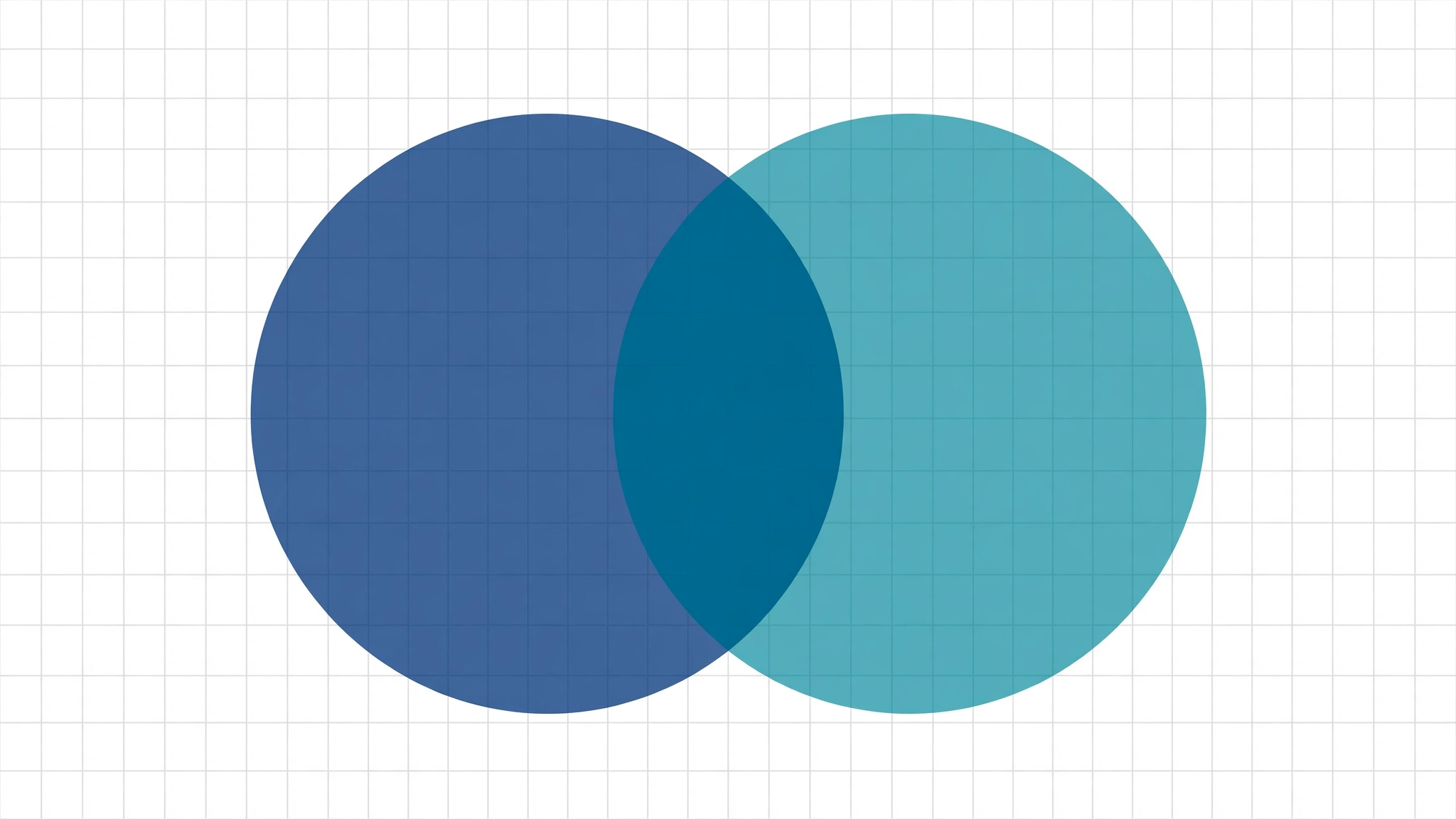
The correlation between the anxiety and stress latent factors was 0.949. Think about what that means. Two factors correlating at .95 share about 90% of their variance. Whatever distinguishes “anxiety” items from “stress” items in this questionnaire, it is not much, at least not in this population.
This is a discriminant validity problem, and it sits at the heart of DASS-21 validity in this sample. Good model fit tells you the proposed structure is a reasonable description of the data. It does not tell you the factors are meaningfully distinct from each other. A scale can fit well and still have subscales that collapse into one another.
Our paper’s practical answer: in Pakistani student research, the DASS-21 total distress score deserves a place alongside the subscales. When anxiety and stress overlap this heavily, the total may be the more honest number.
Why does this happen?
A careful answer stays close to the data. Items across the two subscales use similar language around arousal, worry, and tension, and in this student population distress may simply not sort itself into neat labeled boxes. University life in Lahore produces a blended strain, and the questionnaire may be picking up one big distress factor wearing two name tags.
What I will not do is claim this proves the subscales are useless everywhere. Factor structure can vary across populations, languages, and contexts. Our sample was students in one city, surveyed in English, at one point in time. The finding is a warning flag for similar samples, not a verdict on the instrument worldwide. It is exactly the kind of wrinkle a careful DASS-21 validity analysis is meant to surface.
A side finding worth your attention
The same study compared symptom levels by discipline. Medical students scored 1.43 points lower on the PHQ-9 after adjustment (95% CI -2.40 to -0.45, p = .004). That is statistically detectable but small, and discipline explained only 3.4% of the variance.
Female gender (+1.69 points), previous depression treatment (+4.15), and shorter sleep (-0.33 per hour) were all more informative than which degree a student was pursuing. Small effects and humbled expectations keep showing up in this research program. I have started to treat that as a feature.
What this means for your own work
Three habits that protect DASS-21 validity in applied work:
- Do not assume subscales are separable just because the manual names them. Any serious check of DASS-21 validity must look at the factor correlations in your own sample.
- When factors correlate near unity, report the total score alongside subscales, and be cautious about interpreting subscale profiles.
- Remember that reliability is not validity. Our alphas were excellent. The distinctness question was separate, and alpha cannot answer it.
- Note what we did not test: measurement invariance across sex was not examined, two PHQ-9 items showed model misfit, and the symptom network was only moderately stable. Validation is always partial.
If you are still building intuition for p-values and significance along the way, my plain-English guide to p-values is the place to start. Factor correlations are easier to think about once the basics are solid. Those basics are the foundation of any credible DASS-21 validity claim.
The paper
The full study behind this DASS-21 validity discussion:
Asghar T, Hassan A, Sahar I, Tahir M, Shahid B, Komal K. Psychometric properties and symptom profiles of the PHQ-9 and DASS-21 among medical and non-medical university students: a cross-sectional study in Pakistan. BMC Psychology. 2026. doi:10.1186/s40359-026-05332-5. Available from: https://doi.org/10.1186/s40359-026-05332-5
This article discusses the interpretation of published psychometric research. It is educational content, not clinical advice.