Short answer: High blood pressure usually has no symptoms at all. In rare cases it can cause headaches, blurred vision or chest pain, but most people feel perfectly well even when their reading is dangerously high. The only way to know is to have your blood pressure checked.
Six in ten people with high blood pressure do not know it
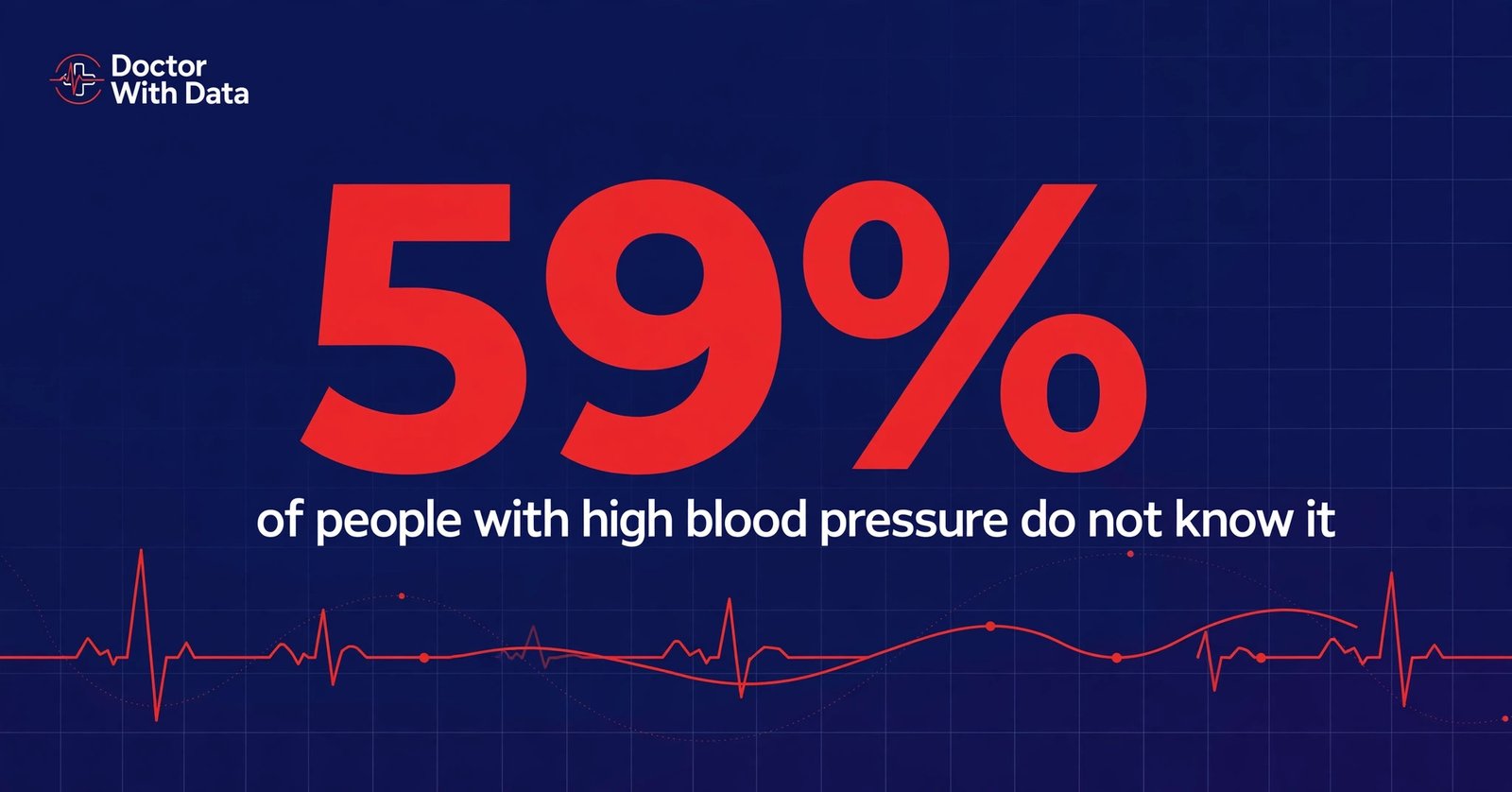
A study of 1.4 million adults in England, published in the journal BMJ Public Health on 23 September 2026, found that 37 per cent had high blood pressure. Of those, 59 per cent had never been diagnosed and were not taking blood pressure medication.
Read that again: more than half of the people walking around with hypertension had no idea. They felt fine. That is the whole point of the question this article answers, because the most common symptom of high blood pressure is no symptom at all.
The researchers, led by medical statistician Wenyu Liu at Oxford Population Health, analysed clinic readings collected by Our Future Health, the UK’s largest health research programme, from participants who enrolled between 2022 and 2025. They used the World Health Organization’s definition: a top (systolic) reading of 140 mmHg or higher, a bottom (diastolic) reading of 90 mmHg or higher, or being on blood pressure lowering medicine.
Why doctors call it the silent killer
High blood pressure rarely announces itself. The NHS is direct on this point: it does not usually cause any symptoms, and many people have it without realising. Rarely, very high blood pressure can cause headaches, blurred vision or chest pain, but waiting for a warning sign is a dangerous strategy because by the time damage is obvious, it may have been building for years.
Untreated hypertension quietly damages blood vessels. It is one of the most important causes of stroke, heart disease and premature death. Feeling well therefore tells you nothing about your blood pressure.
What the study actually found
Beyond the headline numbers, the study’s detail is worth knowing:
- The scale: 37 per cent of participants met the hypertension definition. That is more than one in three adults.
- It is not just an older person’s problem: 15 per cent of adults aged 18 to 39 had hypertension, rising to 71 per cent of those aged 80 or older.
- Men are more affected: after adjusting for age, 42 per cent of men had hypertension compared with 29 per cent of women.
- Treatment is not always working: among participants already taking blood pressure medication, half still had readings at or above 140/90. Dr Iain Turnbull, a GP and clinical research fellow at Oxford Population Health, said it was not clear why so many treated patients remained uncontrolled, pointing to factors such as dose changes, other health conditions and the practical difficulty of taking medication consistently.
- Progress has stalled: detection and control improved substantially in the 2000s but plateaued around 2011, with the authors noting that healthcare disruptions during the Covid-19 pandemic may have caused lasting setbacks.
So when should you actually worry?
The honest answer from the evidence: worry less about symptoms and more about your last reading. The NHS advises getting your blood pressure checked at a pharmacy or GP surgery if you are aged 40 or over and have not had it checked for more than 5 years, or if you think you might be at risk. Many pharmacies in England offer free checks for people over 40, and the NHS Health Check programme covers adults aged 40 to 74.
Some people should check earlier. The NHS lists the main risk factors: getting older, having close relatives with high blood pressure, being of Black African, Black Caribbean or South Asian background, a diet high in salt, being overweight, smoking, drinking too much alcohol and long-term stress.
What happens at a blood pressure check
It is quick and painless. A cuff inflates around your upper arm and the machine measures the pressure in your blood vessels. If the reading is high, your GP may ask you to check your blood pressure at home over the next few days, come back for another reading in a few days or weeks, or wear a portable monitor that takes readings over 24 hours. A single high reading at the surgery does not equal a diagnosis, because nerves can push a clinic reading up.
If you use a home monitor, sit with your back supported and legs uncrossed for at least five minutes before the test, keep your arm at heart level, and try to relax without talking. Take a second reading a few minutes later. If you check at home regularly, tell your GP practice.
A note on home blood pressure machines
A home reading can be as useful as a clinic one if the device is validated and the cuff fits. The point of checking is not a single number on a bad day, it is the pattern. Readings of 140/90 or above on more than one occasion are what turn a suspicion into a diagnosis, which is why the 24-hour monitor exists: it catches whether your pressure stays high while you sleep and go about your day.
The bottom line
Nearly six in ten adults with high blood pressure in England do not know they have it. That single finding, from one of the largest studies of its kind, answers the title question more plainly than any symptom list: if you are waiting to feel something, you will wait too long. The study’s authors called for more active detection and for treatment decisions to weigh a person’s overall cardiovascular risk, not just a single reading.
A blood pressure check takes minutes, is free at most pharmacies for over-40s, and is the only reliable way to know where you stand. If your last check was more than five years ago, this is your sign to book one.
Frequently asked questions
What are the early symptoms of high blood pressure?
There usually are none. High blood pressure does not typically cause early warning symptoms, which is why it is called the silent killer. The only reliable way to find out is a blood pressure check.
Can high blood pressure cause headaches?
Rarely, very high blood pressure can cause headaches, blurred vision or chest pain, according to the NHS. Most headaches are not caused by blood pressure, and these symptoms can have many other causes. Recurring headaches are worth discussing with your GP.
What blood pressure reading is considered high?
The World Health Organization definition used in the research is a systolic reading of 140 mmHg or higher, or a diastolic reading of 90 mmHg or higher, or being on blood pressure lowering medication. In the UK, your GP will usually confirm a diagnosis with repeated readings or 24-hour monitoring before starting treatment.
How often should I have my blood pressure checked?
The NHS advises getting it checked if you are over 40 and have not had a check in the past five years, or sooner if you have risk factors such as a family history of hypertension, being overweight, smoking or certain ethnic backgrounds. If you already have high blood pressure, your GP or pharmacist may recommend more frequent home checks.
Can you have high blood pressure and feel perfectly fine?
Yes, and that is the norm rather than the exception. The Oxford study found 59 per cent of people with hypertension had never been diagnosed, most of them feeling well. Feeling fine is not evidence of healthy blood pressure.