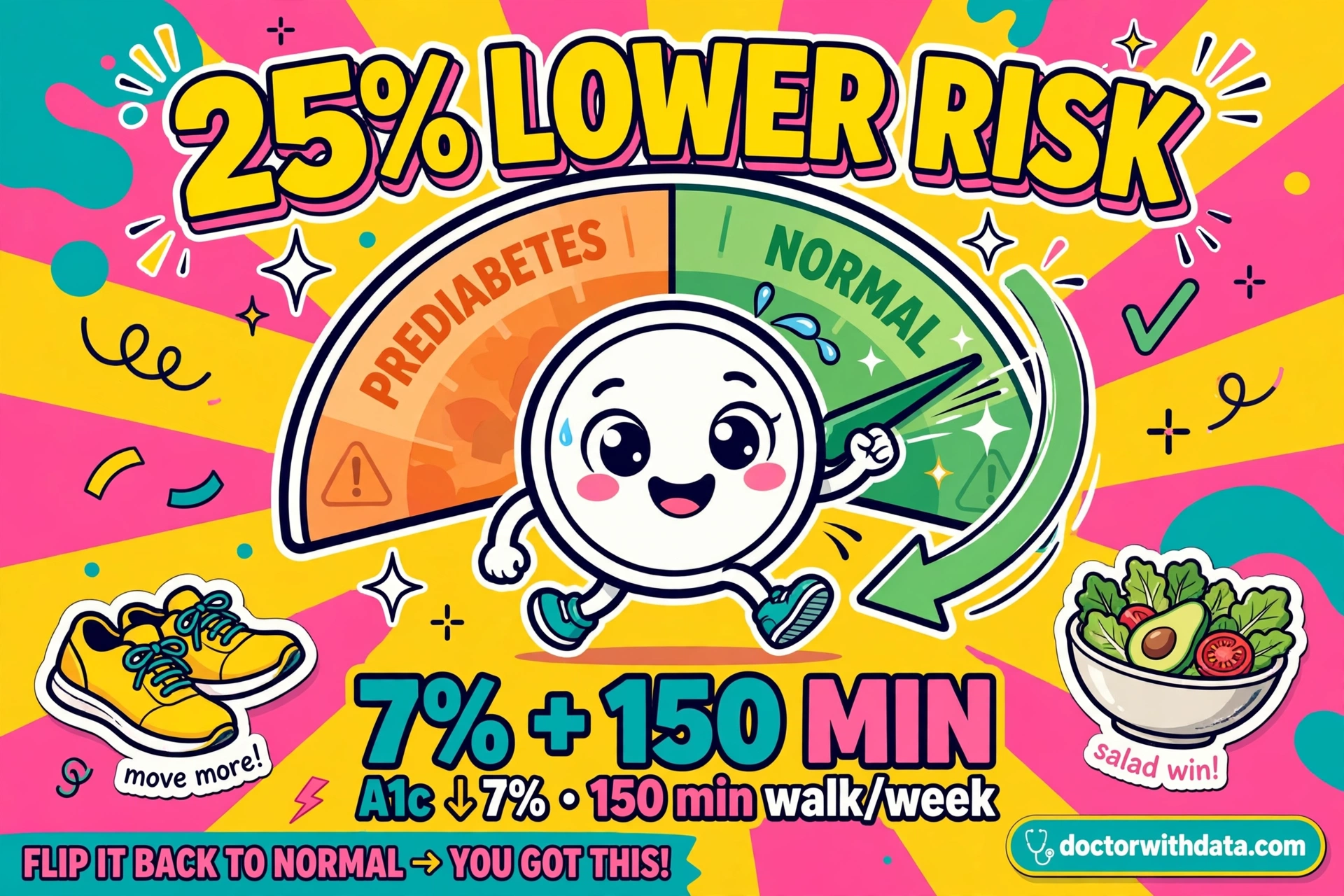
Can you reverse prediabetes? Short answer: Yes, prediabetes can often be pushed back into the normal range, and the strongest long term evidence favours structured lifestyle change over metformin for wider health protection. In a 20 year follow up of adults with prediabetes, an intensive lifestyle programme built around losing at least 7 percent of body weight and doing at least 150 minutes of activity a week was linked to a 25 percent lower risk of developing three or more chronic conditions. Metformin did not show a statistically significant reduction on that same outcome. That is the finding, published in JAMA in June 2026, that changes the advice from lose a bit of weight if you can to treat this as a long term disease prevention programme, not a short diet.
This article explains what prediabetes means, what the new study actually did, what reverse should and should not mean, and the practical steps that match the evidence. It is general information only and is not a substitute for personal medical advice.
What is prediabetes, in plain language?
Prediabetes means your blood glucose is higher than normal but not yet high enough for a diagnosis of type 2 diabetes. In the UK it is usually identified with an HbA1c blood test of 42 to 47 mmol/mol. Diabetes is diagnosed at 48 mmol/mol or above. The American Diabetes Association uses a slightly different HbA1c range, 5.7 to 6.4 percent, for the same idea.
HbA1c reflects average blood glucose over roughly the previous two to three months. A result in the prediabetes range is a warning stage. Many people feel completely well, which is why testing matters. Without change, a proportion of people will progress to type 2 diabetes each year. With change, blood glucose can fall back below the prediabetes threshold. Clinicians sometimes call that regression or remission of prediabetes. It does not mean the underlying risk disappears forever, and it does not guarantee that diabetes will never develop. It does mean the trajectory can change.
What did the 20 year JAMA study find?
The new analysis comes from the Diabetes Prevention Program, known as the DPP, and its long term follow up, the DPP Outcomes Study. The original trial recruited adults at high risk of type 2 diabetes in the United States between 1996 and 1999 and randomly assigned them to one of three groups: an intensive lifestyle intervention, metformin, or placebo.
For this multimorbidity analysis, Salive and colleagues linked 1,173 participants who were enrolled in Medicare and consented to use of their claims data. Participants were followed through 2021, for up to 21 years. The median age by follow up was 74 years, and 68 percent were women.
The researchers tracked 15 chronic conditions commonly recorded in Medicare data. The list included hypertension, heart disease, stroke, arthritis, chronic kidney disease, chronic obstructive pulmonary disease, cancer, depression, dementia, osteoporosis and diabetes itself. Multimorbidity means living with two or more long term conditions at the same time. It matters because the burden is rarely one disease in isolation. It is the combination that drives hospital visits, polypharmacy, frailty and loss of independence.
By the end of follow up, 85 percent of participants had developed two or more conditions. The proportions were 82 percent in the lifestyle group, 85 percent in the metformin group and 87 percent in the placebo group. After adjustment, the lifestyle group had a hazard ratio of 0.79 for developing two or more conditions compared with placebo, which the authors and the National Institutes of Health summarised as a 21 percent lower risk. For three or more conditions, the reduction was 25 percent. The association persisted even when diabetes was removed from the multimorbidity definition, suggesting the benefit was not only about preventing diabetes itself.
Metformin told a different story on this outcome. Its hazard ratio was 0.91, with a 95 percent confidence interval of 0.78 to 1.07. Because that interval crosses 1.0, the result was not statistically significant. In plain terms, this analysis could not distinguish the metformin group from placebo on multimorbidity. That is not the same as saying metformin never helps. Earlier DPP results showed metformin can delay diabetes in some groups. The new point is narrower and important: on the long term accumulation of multiple chronic conditions, lifestyle showed a clear signal and metformin did not.
Sources: NIH news release, 15 June 2026, https://www.nih.gov/news-events/news-releases/adults-prediabetes-lifestyle-intervention-lowered-risk-developing-multiple-chronic-conditions ; JAMA abstract record via Lehigh Valley Health Network Scholarly Works, https://scholarlyworks.lvhn.org/administration-leadership/3855
What was the lifestyle programme, exactly?
It was not vague advice to eat better and move more. The DPP lifestyle intervention had two explicit targets:
- Lose at least 7 percent of starting body weight. For someone who weighs 90 kg, that is about 6.3 kg. For someone who weighs 80 kg, it is about 5.6 kg.
- Do at least 150 minutes of moderate intensity physical activity per week. Brisk walking is the classic example.
Delivery mattered as much as the targets. Participants were offered 16 individual sessions with a lifestyle coach in the first phase, followed by monthly sessions for roughly two years. After the main trial, all participants were offered the lifestyle curriculum in groups during a six month bridge period. During the outcomes study, group sessions were offered quarterly, and the original lifestyle group received booster sessions twice a year.
That structure is why public programmes modelled on the DPP still use coaches, group support and a full year of contact. The United States Centers for Disease Control and Prevention, which runs the National Diabetes Prevention Program, describes the same core formula: lose 5 to 7 percent of body weight through healthier eating and reach 150 minutes of activity per week. The CDC cites the original DPP result that this approach cut the incidence of type 2 diabetes by 58 percent compared with placebo, and by 71 percent in people aged over 60. Those percentages are for diabetes incidence in the original trial period, not multimorbidity, and they should not be confused with the new 25 percent figure. Together they tell a consistent story: the programme prevented diabetes early and appears to have reduced wider disease burden decades later.
Source: CDC National Diabetes Prevention Program, http://cdc.gov/diabetes-prevention/php/program-provider/ and CDC clinician page, http://cdc.gov/diabetes/hcp/lifestyle-change-program/
Does reverse prediabetes mean I am cured?
No, and careful language protects you here. Prediabetes is a risk state defined by a blood test range. If your HbA1c falls from, say, 45 mmol/mol to 39 mmol/mol and stays there, you have moved out of the prediabetes range. That is a genuine achievement associated in earlier DPPOS analyses with lower later risk, even if the normal reading was achieved only once during follow up. It is still sensible to keep annual testing, because glucose can drift back up, especially if weight is regained or activity falls away.
Avoid three common misreadings. First, one normal result after an illness, a very low calorie week or a lab variation is not proof of reversal. A repeat test in three to six months, agreed with your clinician, gives a truer picture. Second, supplements marketed for blood sugar support were not what the DPP tested. Third, metformin is a prescription medicine with its own indications, benefits and side effects. The JAMA finding is not an instruction to stop it. Any medicine change belongs in a conversation with the prescriber who knows your kidney function, other conditions and preferences.
Can you reverse prediabetes: the evidence based steps
1. Confirm the result and know your number
Ask which test was used, the exact HbA1c value, and when it should be repeated. In the UK, NICE based pathways used by GPs offer people at high risk an annual blood test and referral to a local, quality assured intensive lifestyle change programme. The NHS Healthier You Diabetes Prevention Programme is the English example. If you were told you have prediabetes by a pharmacy finger prick or a home test, arrange a laboratory venous sample for confirmation.
2. Set the 7 percent and 150 minute targets in real units
Write down your current weight and calculate 5 percent and 7 percent. A target range is easier to hold than a single number. Then plan 150 minutes across the week: for example, 30 minutes of brisk walking on five days, or three longer walks plus two shorter ones. Moderate intensity means you can talk in short sentences but not sing. If you have joint pain, heart disease, breathlessness or a history of falls, ask for a tailored plan or physiotherapy input first.
3. Eat for a calorie deficit you can repeat
The DPP emphasised reduced calories and reduced fat in its early curriculum, but the lasting principle is a sustainable energy deficit with food quality that supports fullness. Practical swaps that help many adults include: water or unsweetened drinks instead of sugar sweetened drinks; wholegrain versions where you like them; vegetables filling half the plate; protein at each meal; and planned portions for energy dense foods such as cheese, nuts, oils and alcohol. Very low calorie diets and fasting regimens can lower glucose quickly in selected patients, but they need medical supervision, especially if you take glucose lowering or blood pressure medicines. They were not the intervention tested in this 20 year analysis.
4. Build activity into the week, then protect it
The trial effect came from sustained activity, not a single heroic month. Habit stacking works better than motivation alone: walk after lunch, cycle to the shops, take stairs by default. Resistance training twice a week helps preserve muscle while losing weight, which matters for glucose disposal and for ageing well. Sleep and stress are relevant too, because short sleep can worsen appetite regulation, but they are supporting players. The headline levers remain weight, activity and dietary pattern.
5. Use a programme, not willpower alone
The DPP gave people a coach, a curriculum and peers. Modern equivalents exist in many countries: the NHS Healthier You programme in England, CDC recognised programmes in the United States, and local authority or insurer funded schemes elsewhere. If no programme is available, recreate the minimum structure: a start date, weekly weighing, a food and activity log, a monthly review, and one person who will ask how it went. The 20 year benefit followed a structured start, not leaflet only advice.
6. Re test and look beyond glucose
Agree a repeat HbA1c in three to six months, then at least annually. Also review blood pressure, cholesterol, smoking status and waist circumference. The JAMA outcome was multimorbidity, so cardiovascular risk reduction is part of the same project: stopping smoking, treating hypertension and lipids according to local guidance, and staying up to date with vaccinations and screening. Prediabetes care that only stares at glucose misses the wider prize the study measured.
Who benefits most, and what are the limits of the study?
Randomisation at the start is a major strength. People did not choose their group, which reduces the bias that lifestyle participants were simply more motivated. The follow up is exceptionally long. The use of Medicare claims allowed consistent tracking of 15 conditions in older adults.
There are limits readers should hold in mind. First, this analysis included 1,173 participants who were in Medicare and consented to linkage. They are not identical to the full original DPP cohort or to a younger adult diagnosed today. The median age at follow up was 74, so the multimorbidity outcome reflects ageing as well as metabolic risk. Second, after the original trial ended, all groups were offered lifestyle sessions. That crossover would tend to dilute differences, making the persistent lifestyle signal more notable, but it also means the comparison is not programme versus nothing for 20 years. Third, claims data capture diagnosed and billed conditions. They can miss severity and can reflect access to care. Fourth, hazard ratios describe relative risk over time. They do not promise any individual a 25 percent personal reduction. Absolute differences were modest at the group level: 82 percent versus 87 percent for two or more conditions. At population scale, modest absolute differences across millions of people with prediabetes still matter.
General advice about prediabetes thresholds and annual monitoring is consistent with NICE guidance summarised at GPnotebook: high risk is a fasting glucose of 5.5 to 6.9 mmol/l or HbA1c of 42 to 47 mmol/mol, with at least annual testing and referral to an intensive lifestyle change programme where available. Source: https://gpnotebook.com/en-AU/pages/diabetes-and-endocrinology/at-risk-of-developing-type-2-diabetes-based-on-hba1c-prediabetes
What should I do this week if my HbA1c is 42 to 47?
Book the follow up. Ask for the exact value and the repeat date. Weigh yourself once, calculate your 5 to 7 percent range, and choose the activity minutes you can repeat next week, not in a perfect week. Clear the easiest calorie leak first, most often sugary drinks, alcohol or grazing in the evening. Ask about referral to your local diabetes prevention programme before you try to assemble everything alone. If you already take metformin or any glucose lowering medicine, do not stop it on the basis of a headline. Discuss what the new multimorbidity data does and does not mean for you.
The hopeful message is real. Prediabetes is not a life sentence, and the DPP remains one of the clearest demonstrations in prevention science that structured support can change outcomes for decades. The less glamorous message is also real. The benefit came from a defined target, repeated contact and maintenance over years. If you treat the next 12 months as building that structure, you are following the evidence far more closely than any 30 day challenge can offer.
For related reading on metabolic health, see our trial breakdown of how a keto diet affected liver fat, and our evidence check on ultra-processed foods and weight gain.
Frequently asked questions
Can you reverse prediabetes permanently?
Can you reverse prediabetes in a lasting way? You can move HbA1c back below 42 mmol/mol and keep it there, which lowers your risk, but it needs ongoing habits and regular monitoring rather than a one-off fix.
How long does it take to reverse prediabetes?
Many structured programmes aim for 5 to 7 percent weight loss over six to twelve months, with HbA1c rechecked at three to six months. Some people see improvement sooner. The DPP benefit on multimorbidity was measured over up to 21 years, so think in months for the first retest and years for the wider protection.
Is metformin better than lifestyle for prediabetes?
For preventing or delaying diabetes, both have evidence, and individual circumstances matter. For the specific JAMA 2026 outcome of developing multiple chronic conditions, lifestyle was associated with lower risk and metformin was not statistically distinguishable from placebo. Do not start or stop metformin without medical advice.
What HbA1c means prediabetes in the UK?
42 to 47 mmol/mol. At 48 mmol/mol or above, diabetes is diagnosed, usually after confirmatory testing if you have no symptoms. Ask your GP team which range applies to your result, as other factors can affect HbA1c accuracy.
Do I need to cut out all carbohydrates?
No. The DPP focused on total calories, fat reduction, weight loss and activity. Many people find moderating portions of refined carbohydrates and sugary drinks helpful, but total exclusion is not required by the trial evidence and is hard to sustain. A dietitian can tailor carbohydrate advice to your preferences, culture and medicines.
What is the 25 percent finding in one sentence?
Adults with prediabetes who received the DPP intensive lifestyle intervention had a 25 percent lower risk of developing three or more chronic conditions over up to 21 years than those who received placebo, while metformin showed no statistically significant reduction on that outcome.
Sources
- Salive ME et al. Lifestyle and Metformin Interventions and Risk of Multimorbidity in Adults With Prediabetes. JAMA. 202
6;336(7):577-586. DOI 10.1001/jama.2026.8492. Abstract record: https://scholarlyworks.lvhn.org/administration-leadership/3855 - National Institutes of Health. For adults with prediabetes, lifestyle intervention lowered risk of developing multiple chronic conditions. 15 June 2026. https://www.nih.gov/news-events/news-releases/adults-prediabetes-lifestyle-intervention-lowered-risk-developing-multiple-chronic-conditions
- Centers for Disease Control and Prevention. National Diabetes Prevention Program. http://cdc.gov/diabetes-prevention/php/program-provider/ and http://cdc.gov/diabetes/hcp/lifestyle-change-program/
- GPnotebook. At risk of developing type 2 diabetes based on HbA1c (prediabetes), summarising NICE guidance. https://gpnotebook.com/en-AU/pages/diabetes-and-endocrinology/at-risk-of-developing-type-2-diabetes-based-on-hba1c-prediabetes