Are People With Autoimmune Diseases More Likely to Get Long COVID?
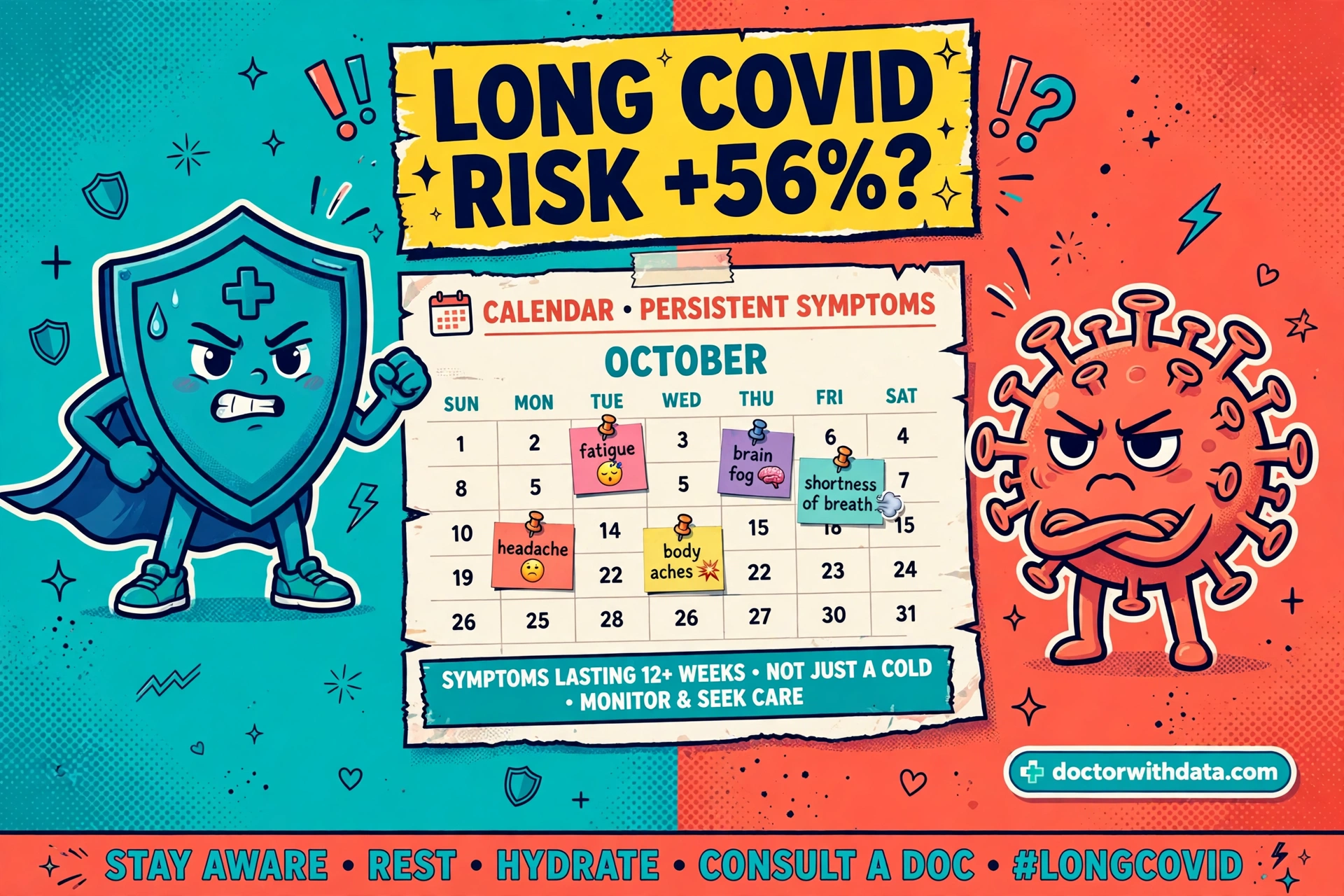
Does autoimmune disease increase long COVID risk? Yes. A major new analysis of United States health records found that people with autoimmune rheumatic diseases developed long COVID at nearly twice the rate of matched patients without these conditions: 2.8% compared with 1.5%. After adjusting for other factors, the risk was 56% higher.
The study, published online on 14 October 2026 in Arthritis & Rheumatology, is the largest of its kind to quantify the link between autoimmune rheumatic diseases and long COVID. It also identifies which patients within that group faced the highest risk: people who had severe acute COVID-19, those with lung disease or obesity, and those taking certain immune-suppressing medicines. Here is what the research found, what it cannot prove, and what it means for you.
What the New Study Did
Researchers led by Namrata Singh at the University of Washington in Seattle ran a retrospective cohort study using the National Clinical Cohort Collaborative (N3C), a centralised collection of electronic health records from across the United States.
They looked at adults with a first documented SARS-CoV-2 infection between September 2021 and December 2023, and followed them through December 2024. Long COVID was counted when a patient received the ICD-10 diagnosis code U09.9 or attended a dedicated long COVID clinic between 28 and 365 days after their first infection.
Each patient with an autoimmune rheumatic disease was matched one to one with a control patient without such a disease. The matching used propensity scores for age, with exact matching on sex, race and ethnicity, the dominant COVID variant period at the time of infection, and the health organisation that contributed the data. That produced a matched cohort of 187,106 patients, a size that gives the headline numbers unusual statistical weight for this kind of question.
What It Found: The Headline Numbers
In the matched cohort, long COVID occurred in 2.8% of patients with autoimmune rheumatic disease and 1.5% of patients without. In multivariable analysis, having an autoimmune rheumatic disease was associated with an increased risk of long COVID with an adjusted hazard ratio of 1.56 (95% confidence interval 1.45 to 1.67).
In plain language: after accounting for age, sex, variant period and other measured factors, people with these conditions were about one and a half times as likely to develop long COVID as otherwise similar people without them. The confidence interval, which runs from 1.45 to 1.67, sits well clear of 1.0, which is why the researchers describe the association as robust rather than borderline.
It is worth keeping the absolute numbers in view alongside the relative ones. A 2.8% rate means roughly 97 out of every 100 people with an autoimmune rheumatic disease in this dataset did not receive a long COVID diagnosis or clinic referral in the follow-up window. The risk is elevated, not overwhelming.
Who Was Hit Hardest Within the Autoimmune Group
The researchers also asked which patients with autoimmune rheumatic diseases were most likely to develop long COVID. Four factors stood out:
- Severe acute COVID-19. People whose initial infection was more severe faced higher long COVID risk. This mirrors what has been seen in the general population, where a rough acute illness is the most consistent predictor of lingering symptoms.
- Pulmonary disease. Pre-existing lung involvement raised the risk further.
- Obesity. Higher body weight was independently associated with long COVID in the autoimmune group.
- Certain medications. Exposure to rituximab or to glucocorticoids before the acute infection was associated with increased long COVID risk.
The study also compared specific diseases against each other. One condition, Sjögren’s syndrome, was associated with a higher risk of long COVID than the other autoimmune rheumatic diseases studied.
The medication finding deserves careful reading. Rituximab and glucocorticoids are powerful immune-suppressing drugs, and it is biologically plausible that blunting the immune response makes it harder to clear the virus fully. But there is a competing explanation: people prescribed these drugs often have more severe underlying disease, so the medicine may partly be a marker for sicker patients. The study design cannot fully separate those two explanations, and the authors do not claim that it does.
Why Might Autoimmune Disease Raise the Risk?
The paper itself does not test mechanisms, but researchers in the field point to several plausible ones:
- An immune system already misfiring. Autoimmune rheumatic diseases such as rheumatoid arthritis, lupus and Sjögren’s syndrome involve chronic inflammation and immune dysregulation. An immune system that is already attacking the body’s own tissues may respond less cleanly to a new viral infection.
- Immunosuppressive treatment. Many of these conditions are managed with drugs that deliberately dampen immune activity. A dampened response may allow the virus to persist longer or trigger a more prolonged inflammatory aftermath.
- Shared risk pathways. Chronic inflammation is itself linked to fatigue, cognitive difficulties and breathing problems, the core symptoms of long COVID, which could make lingering effects more likely or more noticeable.
These are hypotheses, not findings of this study. Treat them as the most sensible explanations, not as proven causes.
What the Study Cannot Prove
This is an observational, retrospective analysis of health records, which means it can show associations, not causation. Several limitations matter for how you read the numbers:
- Surveillance bias. People with autoimmune diseases see doctors more often and are, in Singh’s own words, more attuned to their health. That means they may be more likely to report lingering symptoms and receive a long COVID code. Singh has acknowledged this; in related analyses the team adjusted for healthcare use and the elevated risk persisted, but the published paper’s main result does not remove the concern entirely.
- Undercounting. Long COVID was defined by a diagnosis code or a clinic visit. Many people with genuine lingering symptoms never receive the code, so the true rates in both groups are probably higher than 2.8% and 1.5%.
- US records only. The N3C draws on American health systems. Patterns of care, vaccination coverage and variant timing differ elsewhere, so the numbers may not transfer directly to other countries.
- A changing virus. Infections in the study ran from September 2021 to December 2023, spanning Delta and Omicron waves. Matching on variant period helps, but the virus and population immunity keep evolving.
None of this invalidates the finding. It means the honest reading is: people with autoimmune rheumatic diseases appear meaningfully more likely to develop long COVID, with the effect strongest in those who had severe acute illness or take certain immune-suppressing drugs.
What This Means If You Have an Autoimmune Condition
The most useful takeaway is about severity of the acute infection. Across the data, milder acute COVID was linked with lower long COVID risk, in the autoimmune group as in everyone else. That makes avoiding a severe infection the practical priority: staying current with recommended COVID vaccinations and seeking prompt medical advice when you test positive are the steps rheumatologists emphasise, because early treatment options exist for high-risk patients.
Three things the study does not justify:
- Do not stop your medication. The association between rituximab or glucocorticoids and long COVID is not evidence that stopping treatment helps. Uncontrolled autoimmune disease carries its own serious risks, and any change to immune-suppressing drugs must go through the doctor who prescribed them.
- Do not assume you will get long COVID. Most people with these conditions in the study did not. The finding is about a group-level increase, not an individual prediction.
- Do not skip reporting symptoms. If fatigue, breathlessness, brain fog or other symptoms linger for weeks after a COVID infection, raise it with your doctor rather than assuming it is just your underlying condition. Early recognition is how long COVID gets diagnosed and managed.
If you take rituximab, glucocorticoids or other immune-suppressing drugs, the study’s authors argue the real implication is targeted monitoring: closer follow-up after a COVID infection, so that lingering problems are caught and addressed early rather than months later.
Frequently Asked Questions
Does autoimmune disease increase long COVID risk?
Yes, according to the largest study on the question so far. In a matched analysis of 187,106 US patients, long COVID occurred in 2.8% of those with autoimmune rheumatic diseases versus 1.5% of those without, a 56% higher adjusted risk. The study is observational, so it shows an association rather than proving causation.
Which autoimmune diseases were studied?
The study covered autoimmune rheumatic diseases as a group, which includes conditions such as rheumatoid arthritis, systemic lupus erythematosus (lupus), Sjögren’s syndrome, psoriatic arthritis, vasculitis, systemic sclerosis and related disorders. Sjögren’s syndrome was associated with a higher long COVID risk than the other conditions in the group.
Do immunosuppressant drugs raise long COVID risk?
Exposure to rituximab or glucocorticoids before infection was associated with higher long COVID risk in the study. But these drugs may also mark patients with more severe underlying disease, so the study cannot prove the medicines themselves caused the extra risk. Never stop a prescribed immunosuppressant because of this finding; discuss any concerns with your rheumatologist.
Does having had severe COVID matter more than the autoimmune diagnosis?
Both mattered, and they stacked. Within the autoimmune group, people who had more severe acute COVID-19 were the most likely to develop long COVID. That pattern, seen in the general population too, is why preventing severe acute illness through vaccination and prompt treatment is the main practical lever.
What long COVID symptoms should I watch for?
The study defined long COVID by a diagnosis code or clinic visit 28 to 365 days after infection. In practice, the symptoms doctors look for include persistent fatigue, breathlessness, cognitive difficulties often called brain fog, sleep disturbance and a reduced ability to exercise. If these linger for weeks after a COVID infection, report them rather than assuming they are part of your underlying condition.
How reliable is this study?
It is large, recent, peer-reviewed and carefully matched, which makes it the best evidence available on this specific question. Its weaknesses are those of health-records research: possible surveillance bias, undercounting of undiagnosed cases, and US-only data. Treat the headline as well-supported but not the final word; the authors themselves call for further research into mechanisms and prevention.
Sources
- Singh N, et al. Higher risk of Long COVID among patients with autoimmune rheumatic diseases and immunomodulatory therapy: a retrospective cohort analysis of national US data. Arthritis & Rheumatology. 2026. DOI: 10.1002/art.70361. Wiley Online Library abstract
- HealthDay. Increased risk for long COVID associated with autoimmune rheumatic diseases. Medical Xpress, 20 October 2026. Full report
- Healio. Severe infection, rituximab use predict long COVID in patients with autoimmune disease. Interview with Namrata Singh on surveillance bias and medication findings. Full interview
Related Reading
- Do Antipsychotics Cause Diabetes? What a Major New Study Found: another medication-safety study decoded, on the 90-day diabetes risk window.
- Who Should Never Take Creatine? Contraindications the Evidence Supports: who should avoid a popular supplement, and why the evidence draws the line where it does.
- Do Statins Lower Alzheimer’s Risk? What 502,401 UK Biobank Records Found: a very large cohort study decoded, with the same honest treatment of what observational data cannot prove.
Medical disclaimer: This article explains published research for a general audience. It is not medical advice. If you have an autoimmune condition, discuss COVID-19 prevention and treatment with your own doctor. Never start, stop or change a prescribed medicine without medical guidance.